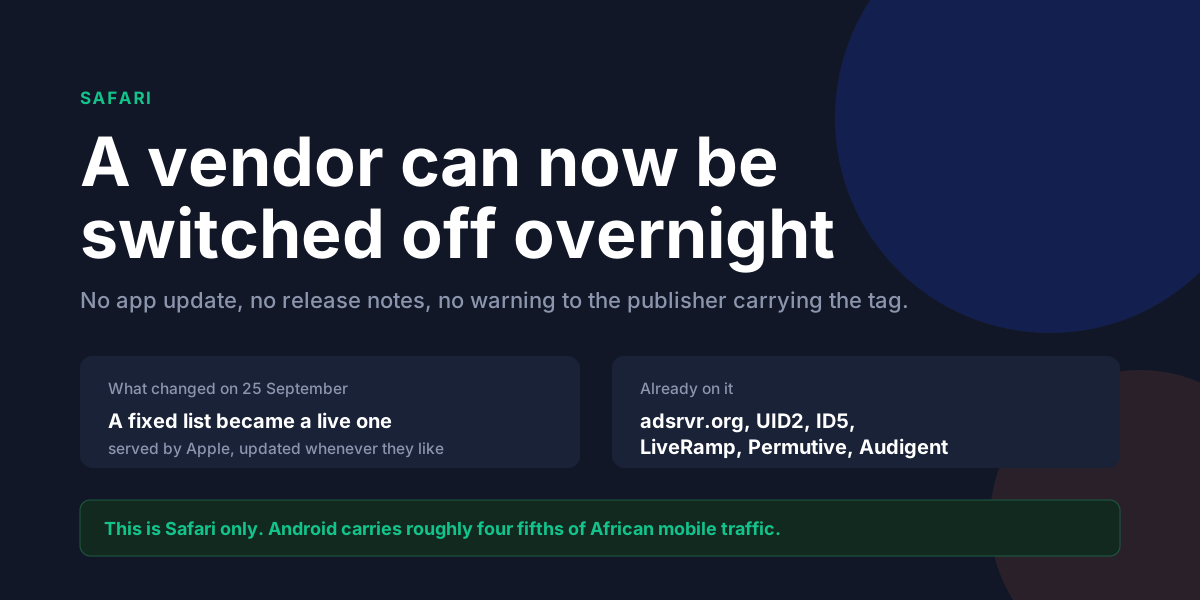
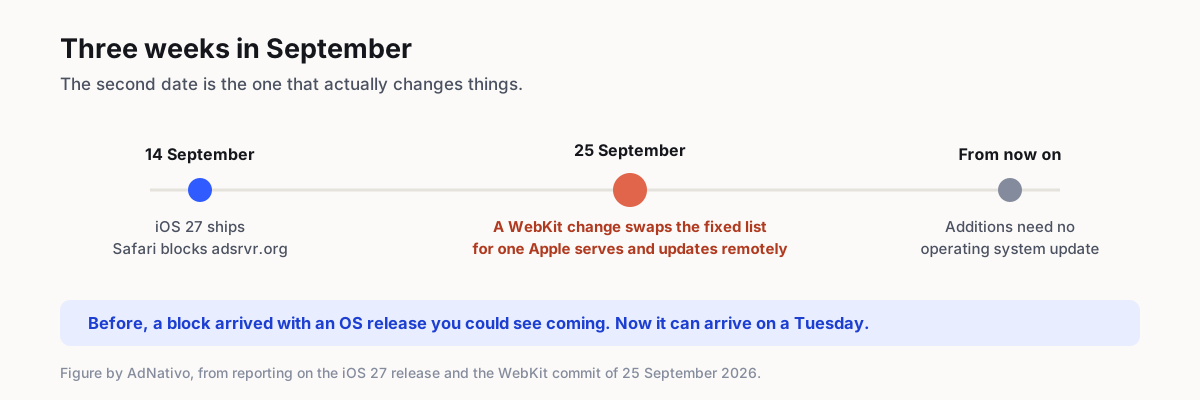
On 14 September, Apple shipped iOS 27. Among other things, Safari stopped loading adsrvr.org, which is The Trade Desk's main ad serving domain. Not an identity domain, the one that actually delivers the ad. Several others went with it, including Unified ID 2.0, ID5, LiveRamp, Audigent and Permutive.
That got the coverage. The thing worth your attention happened eleven days later and got almost none.
The list stopped being a list
Until late September, Safari's block list was compiled into the browser. To add a company to it, Apple had to ship a new version of the operating system. That is slow, and it is visible. You could read about it before it reached a single reader.
On 25 September a change went into WebKit that replaces that fixed list with a rule list fetched from an Apple service and updated remotely.
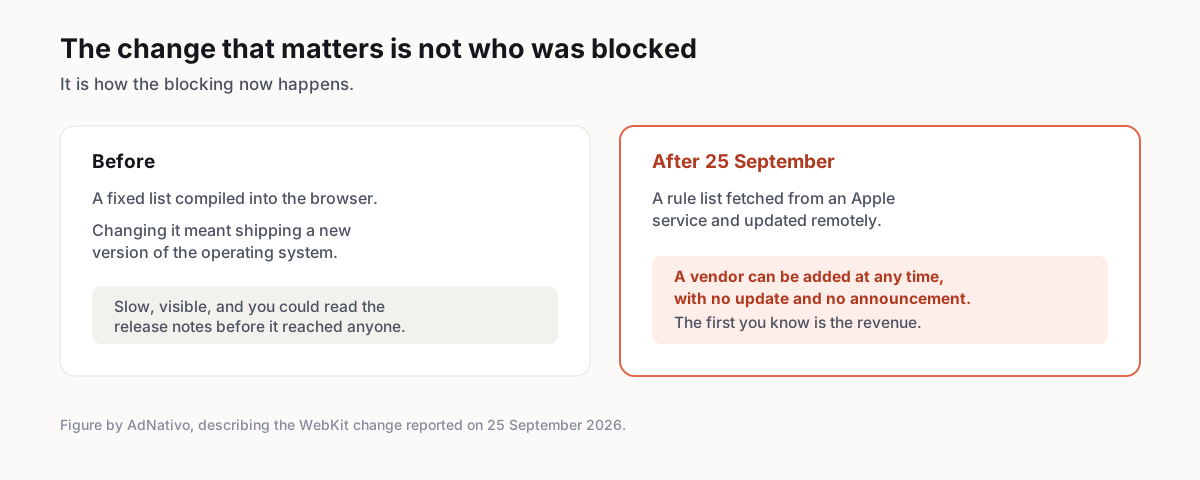
So the question is no longer which companies Apple blocked in September. It is that any vendor can now be added on any day, with no release, no announcement and no notice to the publisher carrying their tag. Reporting suggests hundreds of ad tech and data companies are in scope.
If a partner of yours goes on that list, nobody tells you. The first you know is the revenue.
How exposed you actually are
Here is where the honest answer diverges sharply from the headlines, because most of the coverage is written from a market where iPhones dominate.
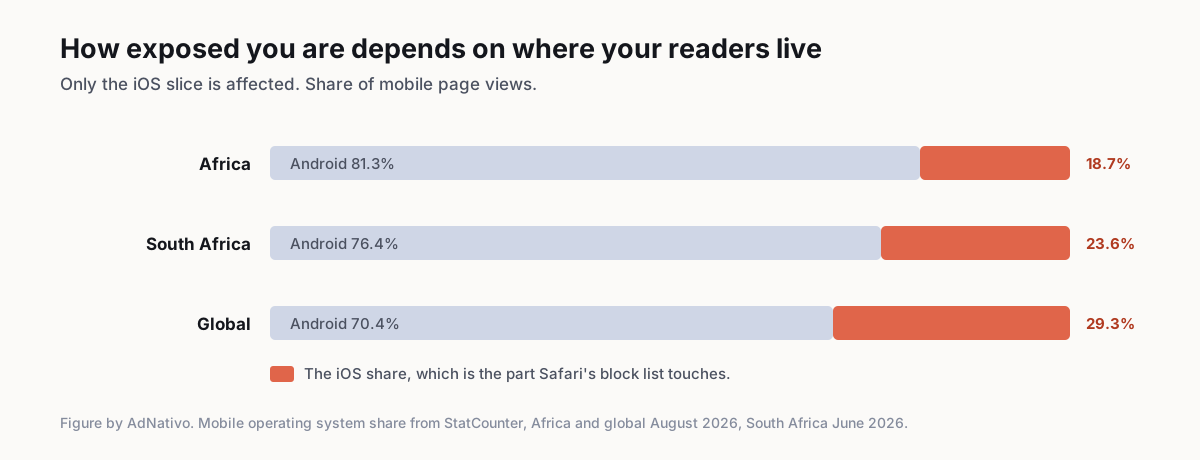
This is Safari on Apple devices. Nothing else. Android carries about 81% of mobile page views across Africa, and roughly 76% in South Africa, against about 70% globally.
So a South African publisher has something like a quarter of mobile traffic in the affected bucket. That is not nothing, and anyone telling you it is has not done the arithmetic. But it is a very different problem from the one facing a publisher whose audience is mostly American, where the iPhone share is far higher and this lands on the majority of their inventory.
The useful move is not to panic or to shrug. It is to find out what your own number is, because the global average is not it.
What to actually do
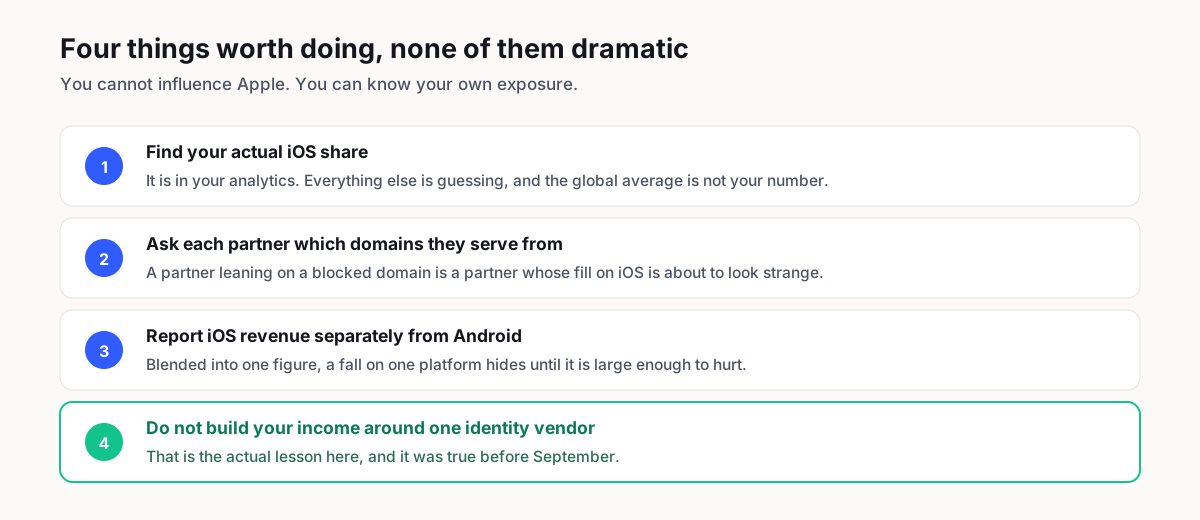
Find your real iOS share. It is sitting in your analytics and takes a minute. Everything downstream of that is guesswork until you have it.
Ask each partner which domains they serve from. This sounds technical and is not. You are asking one question: if Safari stops loading that domain tomorrow, what happens to my fill? A partner who cannot answer that quickly is telling you something.
Report iOS separately from Android. Blended into one number, a fall on one platform hides inside the other until it is big enough to hurt. Split them and you see it in days instead of months.
Do not let one identity vendor carry your income. That is the real lesson, and it was true in August as well. Every few years something upstream changes and whoever had a single point of failure discovers it the expensive way.
The part nobody can fix
It is worth being blunt about the position this leaves publishers in. A company you have no relationship with, in a product you do not control, can now switch off a revenue stream on your site without telling you. There is no appeal, no notice period and no contract between you and Apple that any of this breaches.
That is not a complaint, it is the operating environment. The response is not to argue with it but to stop being surprised by it: know your platform split, keep more than one demand source, and watch the two separately so you notice quickly.
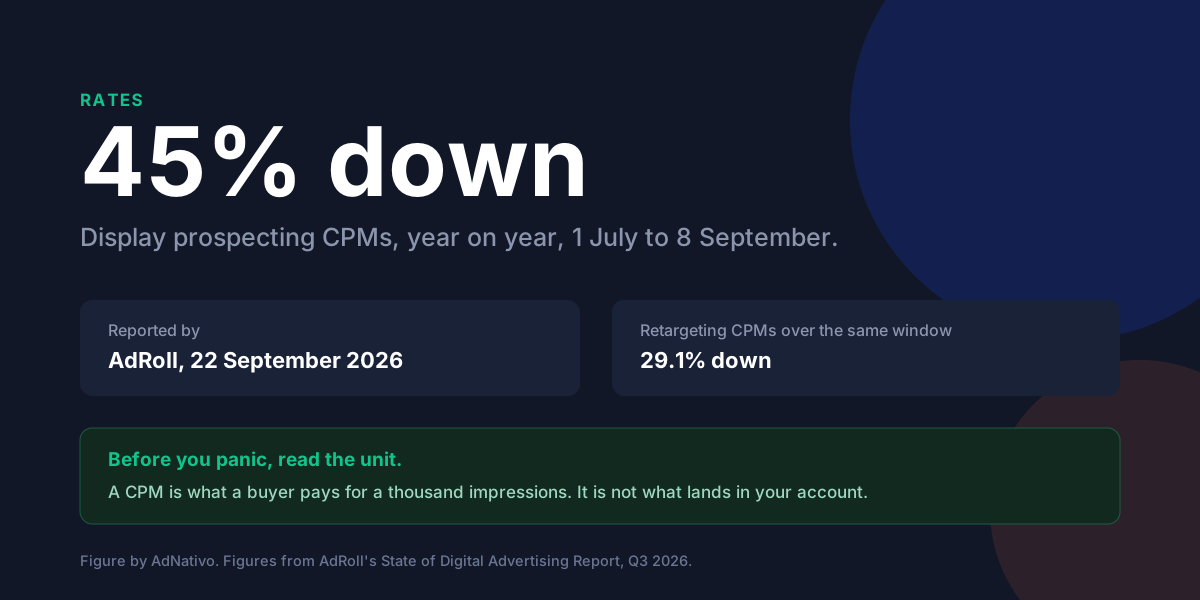
We wrote about the related question of how little of the advertiser's money reaches you in what a falling CPM actually means, and about the other end of the same pipe in the ads.txt mistakes that cost publishers money.
How we handle it
We route each publisher across more than one demand partner rather than one, which is the only real protection against any single upstream decision, Apple's or anyone else's. We report by platform rather than blending it, so a fall on iOS shows up as a fall on iOS.
If a large share of your inventory goes unfilled, or your revenue depends on one source, you can apply as a publisher or read how we work with publishers first.