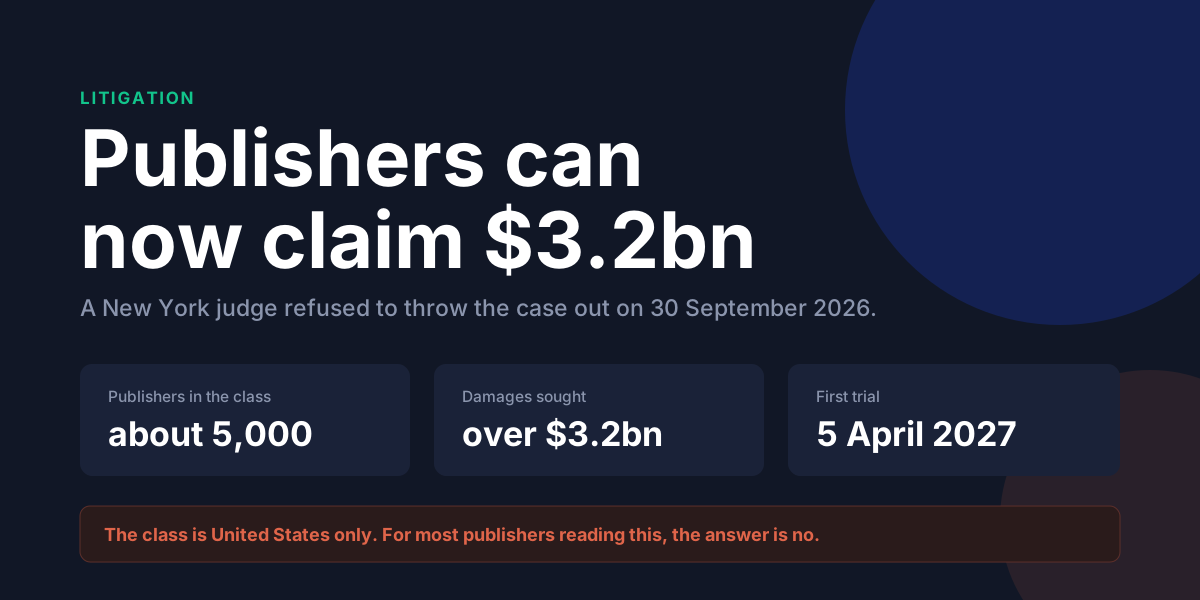
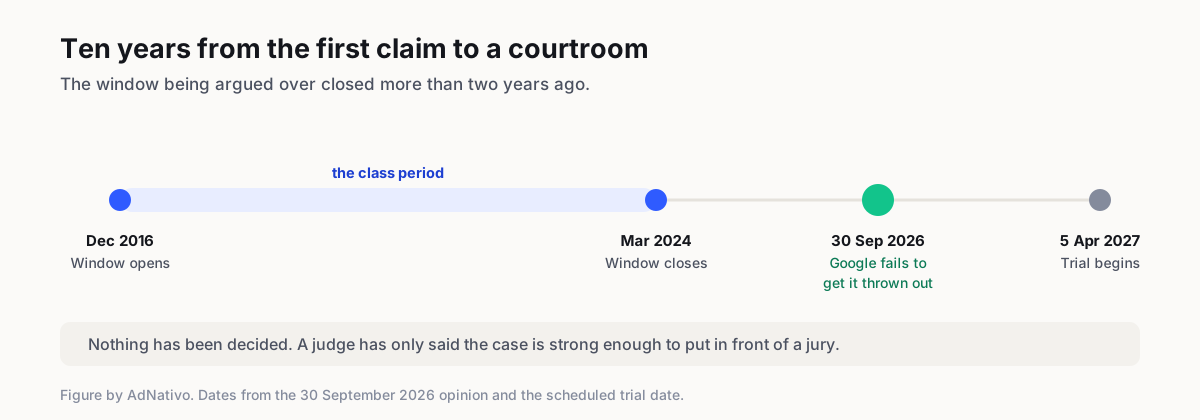
On 30 September a judge in New York handed down an 88 page opinion that got reported, fairly, as publishers being cleared to pursue more than $3.2 billion from Google. Judge P. Kevin Castel refused Google summary judgment on the main claims, declined to throw out the expert evidence on damages, and set the first trial for 5 April 2027.
If you run an independent site, the obvious question is whether any of that is yours. For most readers of this the answer is no, and it is worth knowing why before you spend an afternoon on it.
What the claim says
The case is not that Google is large. It is that Google owned both ends of the same transaction.
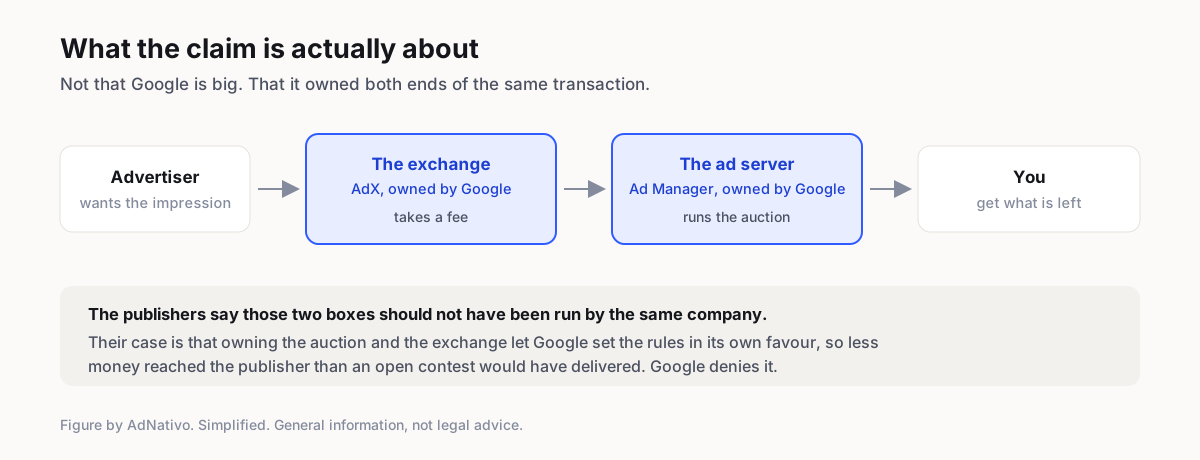
When an advertiser buys an impression on your site, it passes through an exchange and through the ad server that runs the auction. For a very large share of the open web, both of those were Google: AdX on one side, Ad Manager on the other. The publishers argue that owning the auction and the exchange let Google write the rules in its own favour, so less money reached the publisher than a genuinely open contest would have produced. Google denies it.
That is the shape of it. Nothing has been decided. A judge has said only that the case is strong enough to put in front of a jury, which is a real milestone and not a verdict.
Whether you are in the class
This is the part the headlines skip. The certified class is tightly drawn, and you have to pass every test, not most of them.
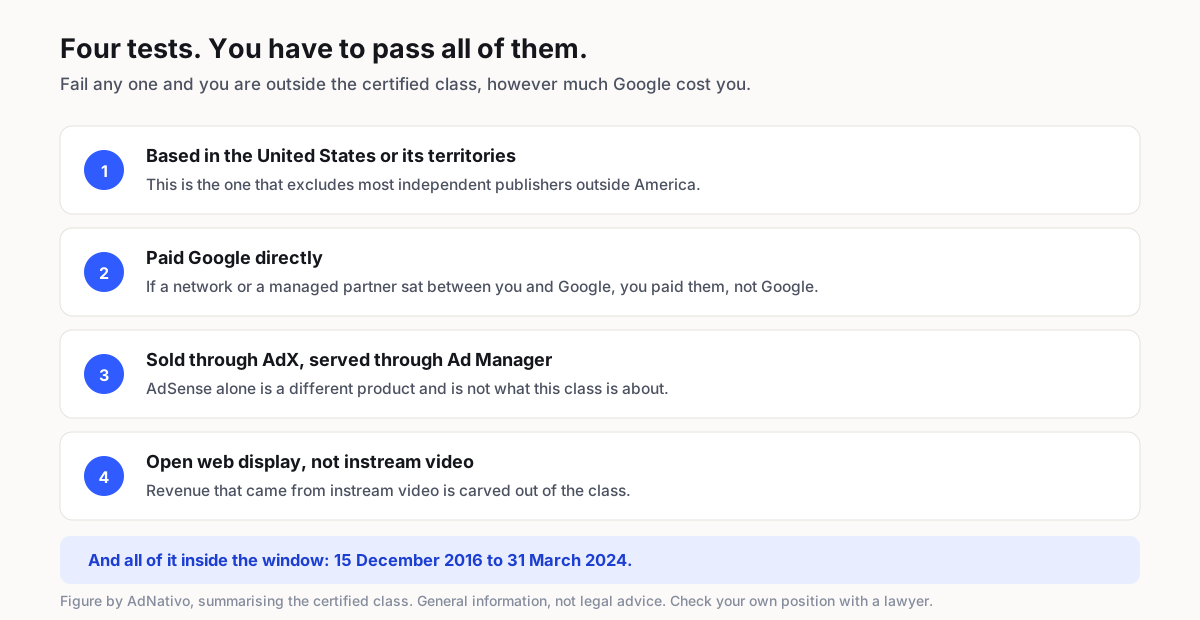
In short, the class covers entities in the United States and its territories that paid Google directly for selling ad impressions through AdX on websites, in open web display rather than instream video, between 15 December 2016 and 31 March 2024.
Four things follow from that, and each one rules out a lot of people.
It is United States only. A publisher in Lagos, Johannesburg, Manchester or Karachi is outside it, no matter how much Google's auction cost them over those eight years. That single line is why most of the people reading this have nothing to claim.
You had to pay Google directly. If a network, a managed partner or a monetisation company sat between you and Google, you were paying them. They held the Google relationship, not you.
AdSense on its own is not it. The class is about AdX and Ad Manager. A site that only ever ran AdSense is a different product and a different argument.
Instream video is carved out. If most of your revenue came from pre roll or mid roll, that part is outside the class even if everything else matches.
So what should you actually do
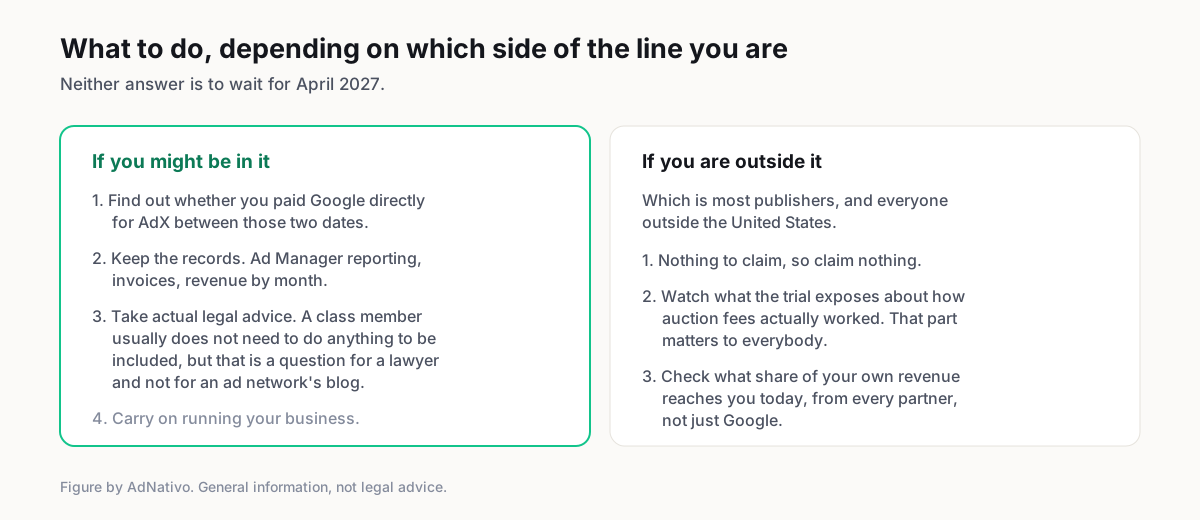
If you might be inside it, work out whether you paid Google directly for AdX in that window, then keep the evidence: Ad Manager reporting, invoices, revenue by month. Then speak to a lawyer. A class member usually does not have to do anything to be included, but whether that applies to you is a question for someone qualified, not for an advertising network's blog.
If you are outside it, there is nothing to claim and no form to fill in. Be wary of anyone who tells you otherwise over the next eighteen months, because a $3.2bn headline attracts people who will offer to handle your claim for a fee.
The part that matters to everyone
Here is why this is worth five minutes even if you are nowhere near the class.
A trial means disclosure. The mechanics of how auction fees actually worked, what was taken and at which step, get argued in public by expert witnesses with access to the real numbers. Publishers have spent a decade guessing at that from the outside. From April 2027 there should be considerably less guessing.
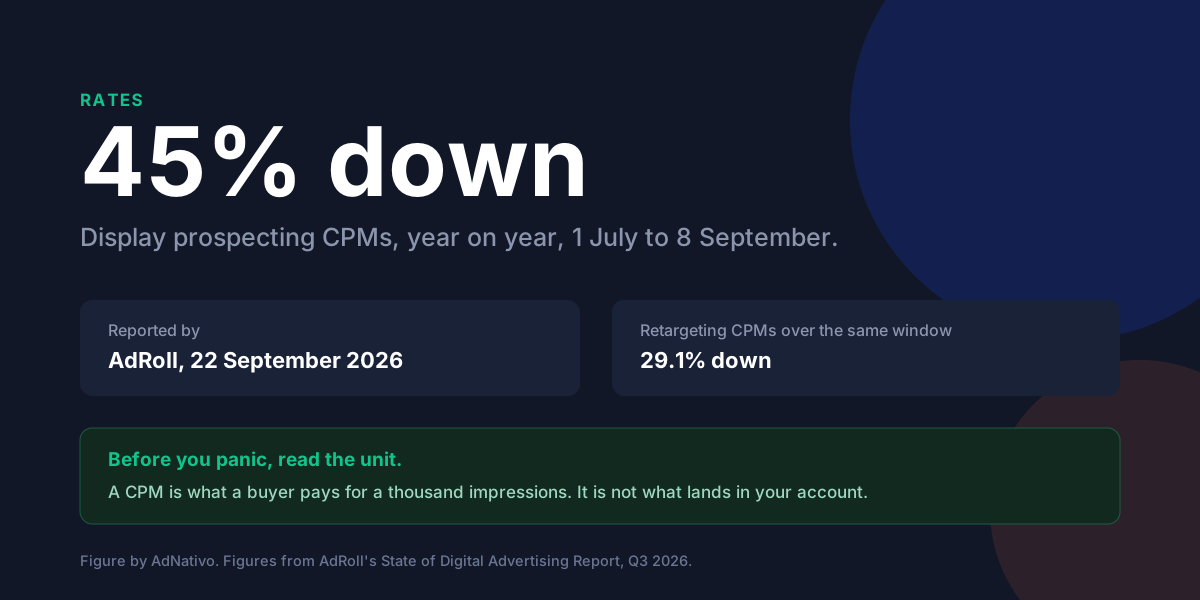
Whatever comes out, the underlying question is the one every publisher should already be asking of every partner, Google or otherwise: how much of what the advertiser paid actually reached me, and who took the rest? We wrote about that chain in what a falling CPM does and does not mean, and the honest answer for most publishers is that they do not know, because nobody shows them.
You do not need a court case to ask a partner that question. You just need to ask it, and to treat a vague answer as an answer.
How we handle it
We report what reached the publisher rather than what the market did, and the revenue share is stated as a share of net revenue so the arithmetic is checkable rather than a matter of trust. That is not a boast, it is the minimum, and the fact that it reads as unusual is most of the point of the case above.
If you want a straight answer about what your inventory earns and what comes out along the way, you can apply as a publisher or read how we work with publishers first.
None of this is legal advice. It is a summary of a public court ruling, written by an advertising network rather than a lawyer. If you think you may have a claim, get proper advice.