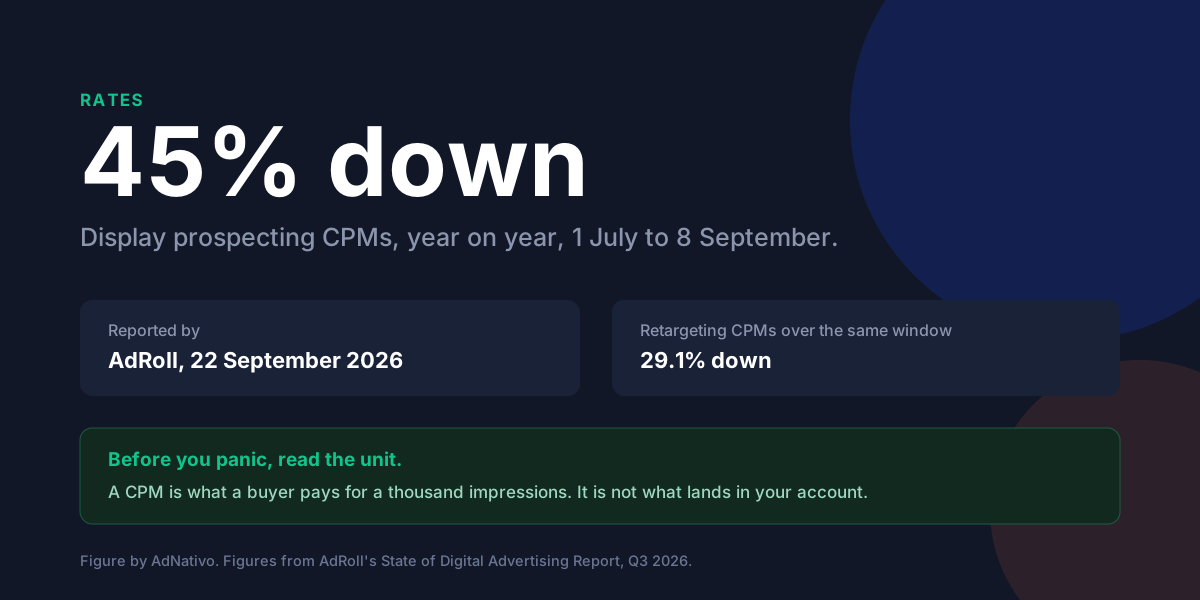
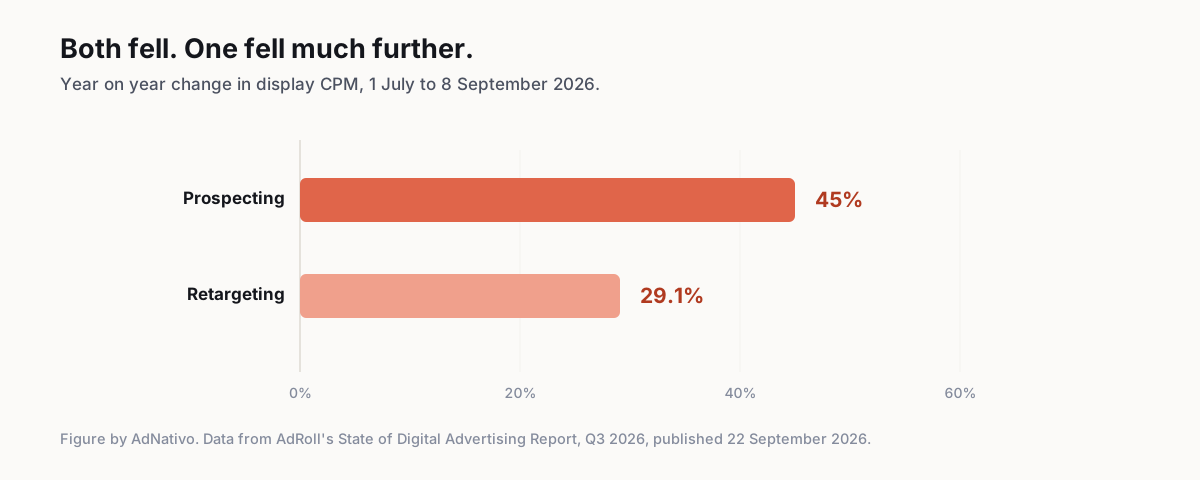
A number went round the trade press last week. Display prospecting CPMs are down 45 percent year on year, measured between 1 July and 8 September, with retargeting CPMs down 29.1 percent over the same window. It comes from AdRoll's State of Digital Advertising Report, published on 22 September.
If you sell advertising on your own site, that headline reads like your rate card falling through the floor. It might be. It also might mean almost nothing to you, and the difference is worth ten minutes.
Notice who published it, and why
AdRoll sells to advertisers. The report is headlined around the holiday season, and to a buyer a 45 percent fall in the cost of reaching new people just before Q4 is straightforwardly good news. Cheaper to prospect, same budget, more reach.
That framing is fair enough. It is simply not written from your side of the table. The same number, read from a publisher's chair, says buyers are paying less per thousand impressions than they were a year ago.
Both readings are true. Neither tells you what happened to your revenue.
A CPM is not your payout
This is the part that gets skipped. A market CPM is what a buyer pays. What reaches you has been through several other things first.
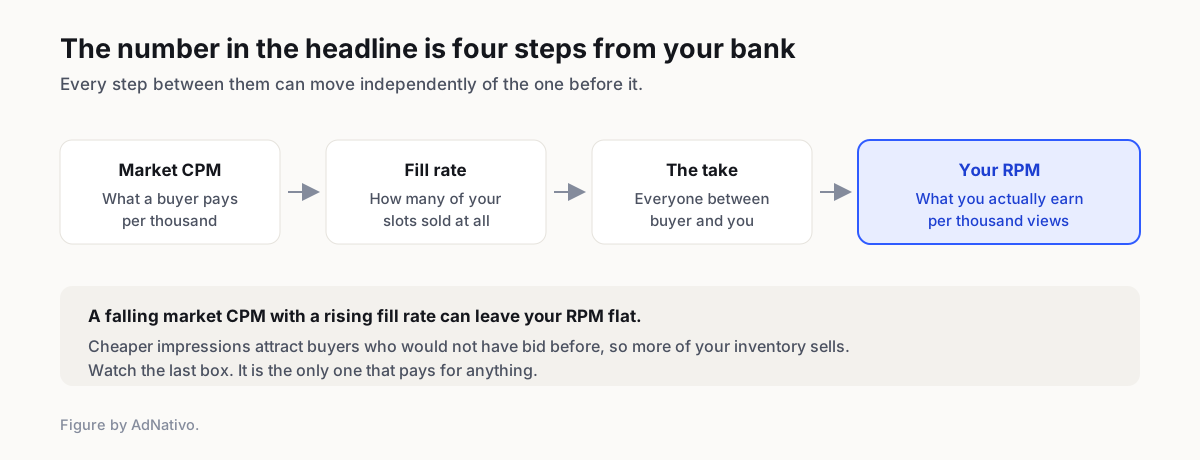
Between the headline and your account sit your fill rate, meaning how many of your slots sold at all, and the share taken by everyone standing between the buyer and you. What comes out the far end is your RPM, and that is the only number in the chain that has ever paid a hosting bill.
Here is why that matters right now. A falling CPM with a rising fill rate can leave your RPM flat. Cheaper impressions pull in buyers who would not have bid at last year's prices, so more of your inventory sells. You lose on rate and win on volume, and the two can cancel out. They can also fail to cancel out, which is the point: you cannot tell from the headline, only from your own reporting.
We wrote about what else moves that number in what native advertising actually pays, which covers geography, placement and viewability.
The question nobody asks until it bites
There is a second thing buried in any conversation about rates, and it decides how your bad weeks feel: what are you being paid for?
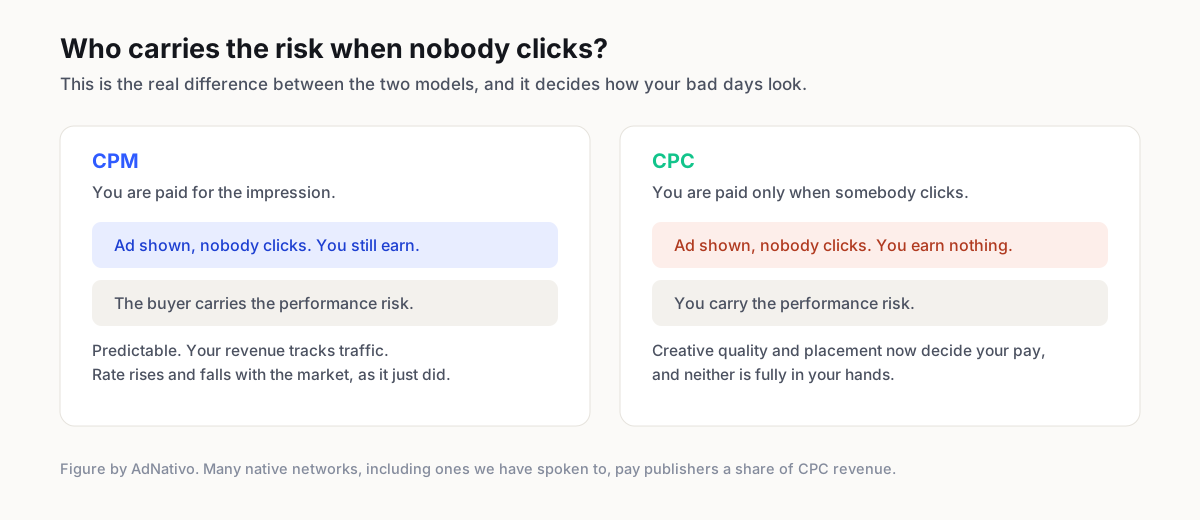
On a CPM basis you are paid for the impression. The ad appears, nobody clicks, you still earn. The buyer carries the risk that their creative was dull.
On a CPC basis you are paid only when somebody clicks. The same impression earns you nothing, and the risk has quietly moved onto you. Your income now depends on somebody else's creative and on how well the unit sits in your page, and only one of those is yours to fix.
Plenty of native networks work this way. We have had it put to us in almost exactly those words by a partner we approached: their advertisers pay on a CPC basis and the network shares that revenue back. That is a perfectly normal arrangement and not a warning sign. It just means a market wide CPM headline tells you even less about your own earnings, because your earnings were never denominated in impressions to begin with.
Worth knowing before you sign anything: ask what you are paid on, ask what happens on an impression that does not convert, and ask whether the share you are quoted is of gross or of net revenue. The third question is the one that most often produces a pause.
Then there is when it was measured
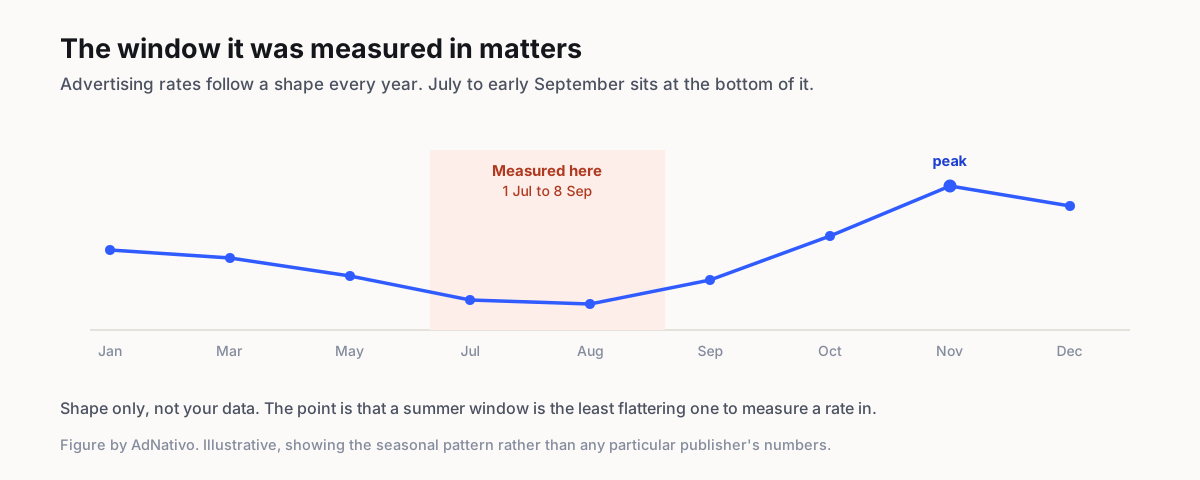
Advertising rates follow a shape every year. Budgets thin out over the summer and build through autumn into the Q4 peak. The window in the report, 1 July to 8 September, sits close to the bottom of that curve.
That does not make the comparison wrong. It is year on year, summer against summer, which is the right way to do it. But it does mean the absolute numbers being quoted are seasonal lows, and a publisher who reads the headline in late September and concludes their Q4 is doomed has drawn a conclusion the data does not support.
What to actually look at
- Your RPM, not the market CPM. Pull the last twelve months. If RPM is flat while the market fell, your fill rate absorbed it and you are fine.
- Your fill rate over the same period. Rising fill alongside falling rate is the normal, healthy version of this story.
- Your unfilled impressions. If a large share of your inventory never sells at any price, the market rate is not your problem and a second demand source probably is the answer.
- What each partner pays you on. If it is CPC, market CPM reports are close to irrelevant to you and click through rate is the number to watch instead.
None of this is an argument that rates do not matter. They do. It is an argument against reacting to a number that was measured somewhere else, in a different unit, at the quietest point of the year.
How we look at it
We report on what reaches the publisher rather than on what the market did, because the second one is not something either of us can influence. The figure that matters is what your inventory earned, and the lever that actually moves it is fill: unsold impressions are worth nothing regardless of what the market rate is doing.
If a large share of your inventory currently goes unfilled, that is the conversation worth having. You can apply as a publisher or read how we work with publishers first.