The rejection email is always short. One line about traffic, a polite close, and no detail. So you open your analytics, see a number that looks respectable, and conclude they were being difficult.
Often they were not. They were measuring something else.
The number you quote is rarely the number they test
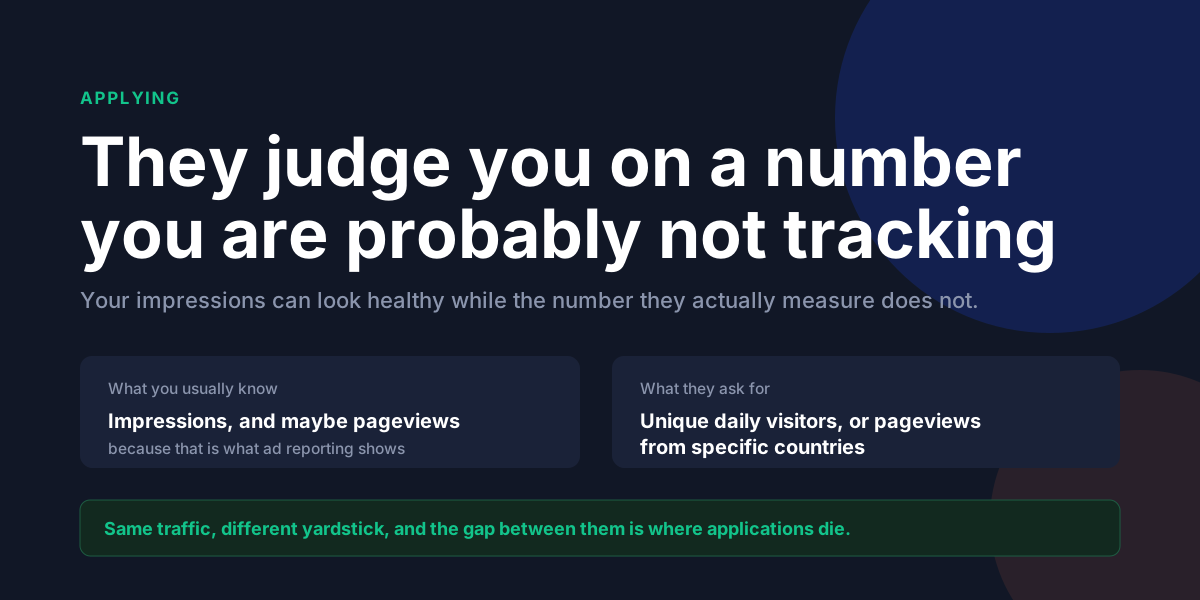
Ad reporting speaks in impressions, because impressions are what gets paid for. Most publishers therefore know their impression count far better than anything else, and reach for it when asked how big they are.
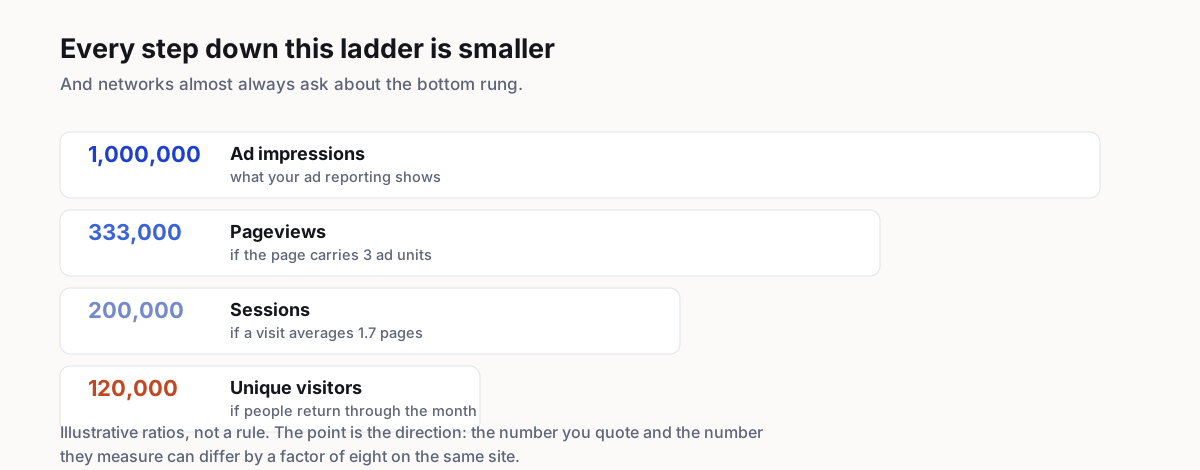
Thresholds are almost never written in impressions. They are written in unique visitors, or pageviews, or occasionally sessions. Those are four different numbers describing the same traffic, and on a site carrying three ad units per page with readers who come back during the month, the top of that ladder can be eight times the bottom.
Quote the top, get tested on the bottom, and the gap is where the application dies.
Some networks publish the bar. Most do not.
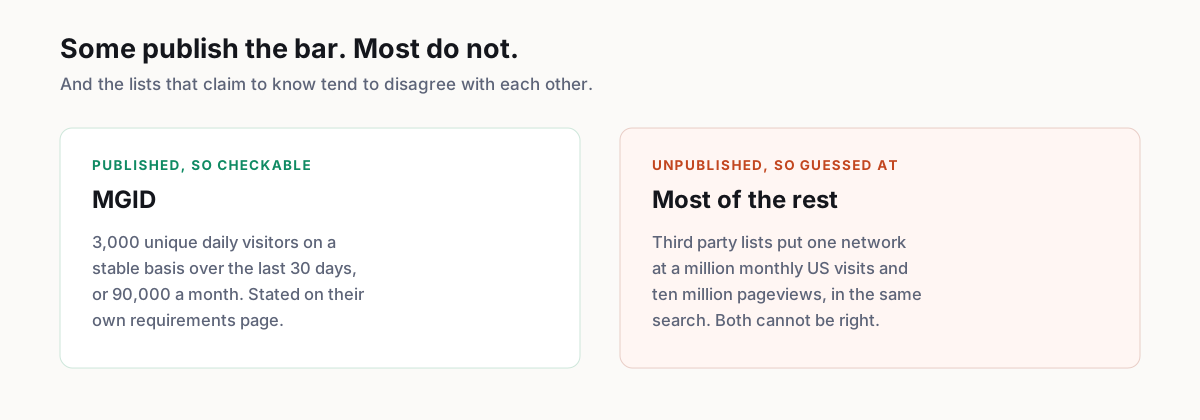
MGID is unusually direct about it. Their requirements page asks for 3,000 or more unique daily visitors on a stable basis over the last 30 days, or 90,000 a month. It also says a decision arrives within 24 hours, that sites running AdSense are fine, that social traffic is accepted, and that streaming, torrent and low information sites are not. Whatever you make of the bar, you can check yourself against it before spending an afternoon applying.
Most networks publish nothing. Into that gap step the "best ad network" roundups, and they are not reliable. In a single search this week, two of them put the same network at a million monthly United States visits and at ten million monthly pageviews. Those are not the same requirement, and both cannot be right. Many of those pages carry affiliate links, the numbers get copied between posts, and nobody revisits them when a network changes its mind.
Geography is a second filter, and it is quieter
A volume threshold can count only the countries the network actually sells in. "Tier 1" in these conversations usually means the United States, the United Kingdom, Canada and Australia.
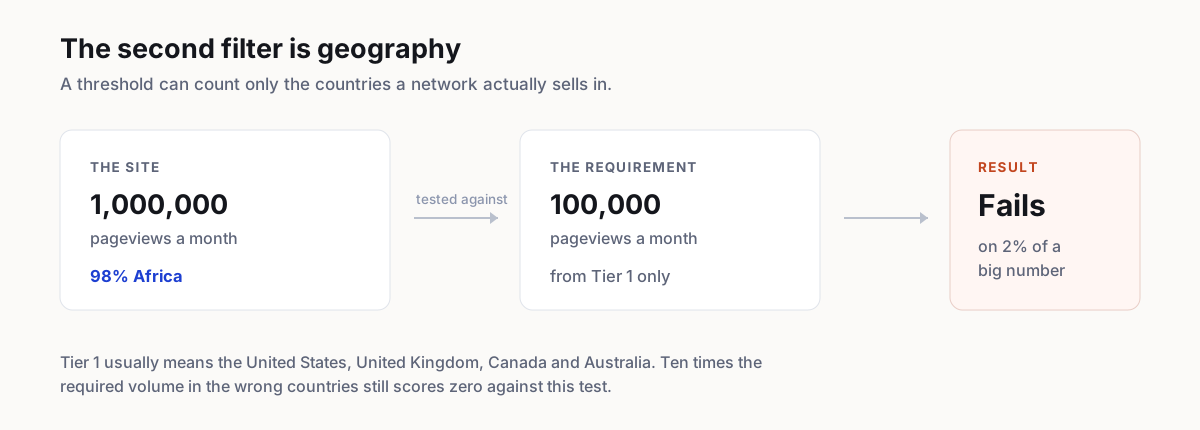
This catches people out because the headline number looks comfortable. A million monthly pageviews against a hundred thousand threshold reads like ten times the requirement. If the threshold counts Tier 1 only and your audience is not there, you are being measured on two percent of your traffic and the answer is no.
It is not a judgement on the site. A network can only buy what its advertisers are paying for, and plenty of them have no meaningful demand outside a handful of countries. Worth knowing before you spend weeks on an application rather than after.
What to establish first
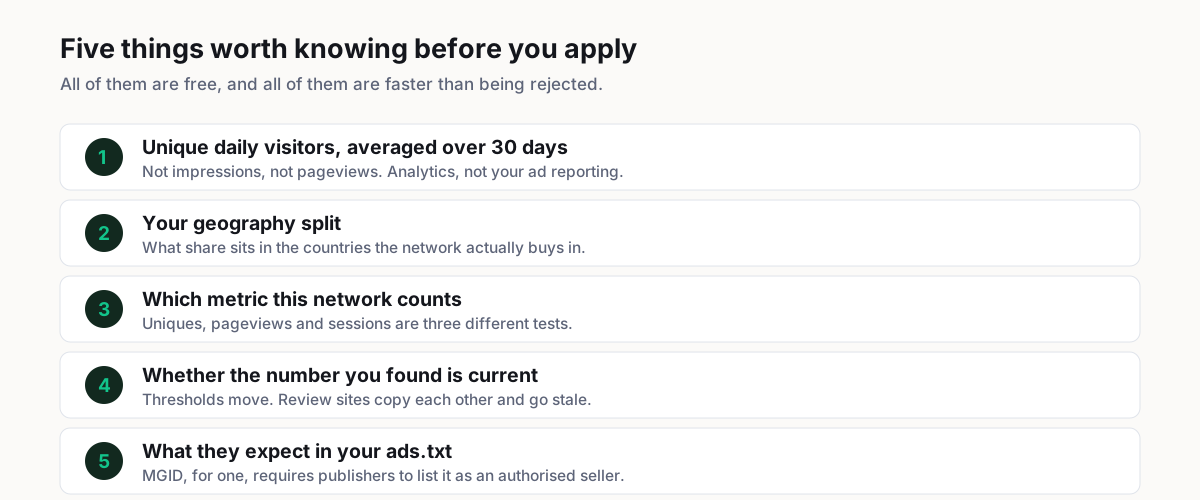
Pull unique daily visitors from analytics rather than from ad reporting, averaged across a full thirty days rather than picked from a good week. Pull the geography split alongside it. Then find out which of those numbers the network in question actually counts, and whether the figure you found is one they still use or one a review site wrote down two years ago.
And check the ads.txt expectation while you are there. MGID, for instance, requires that publishers using ads.txt list it as an authorised seller. A missing line can hold up an otherwise fine application, which is one of several reasons the ads.txt mistakes that quietly cost independent publishers money are worth half an hour of attention.
If you are under the bar
The thresholds exist for an unglamorous reason. Reviewing a site costs a network real money, and so does onboarding one that never delivers enough volume to cover the overhead. The bar is where that arithmetic lands, not a verdict on your writing.
The networks that advertise no minimum and instant approval are mostly selling pop-unders, push notifications and redirects. They will take you today. What they do to a reader's experience, and to your chances with anyone better later, is the price. That is a trade worth making deliberately rather than by accident.
The more useful move is usually to find out the exact number you are short by, in the metric that network actually counts, and then decide whether that gap is a quarter's work or a different business. A specific gap is a plan. A vague sense of being too small is not.